
THE WORK
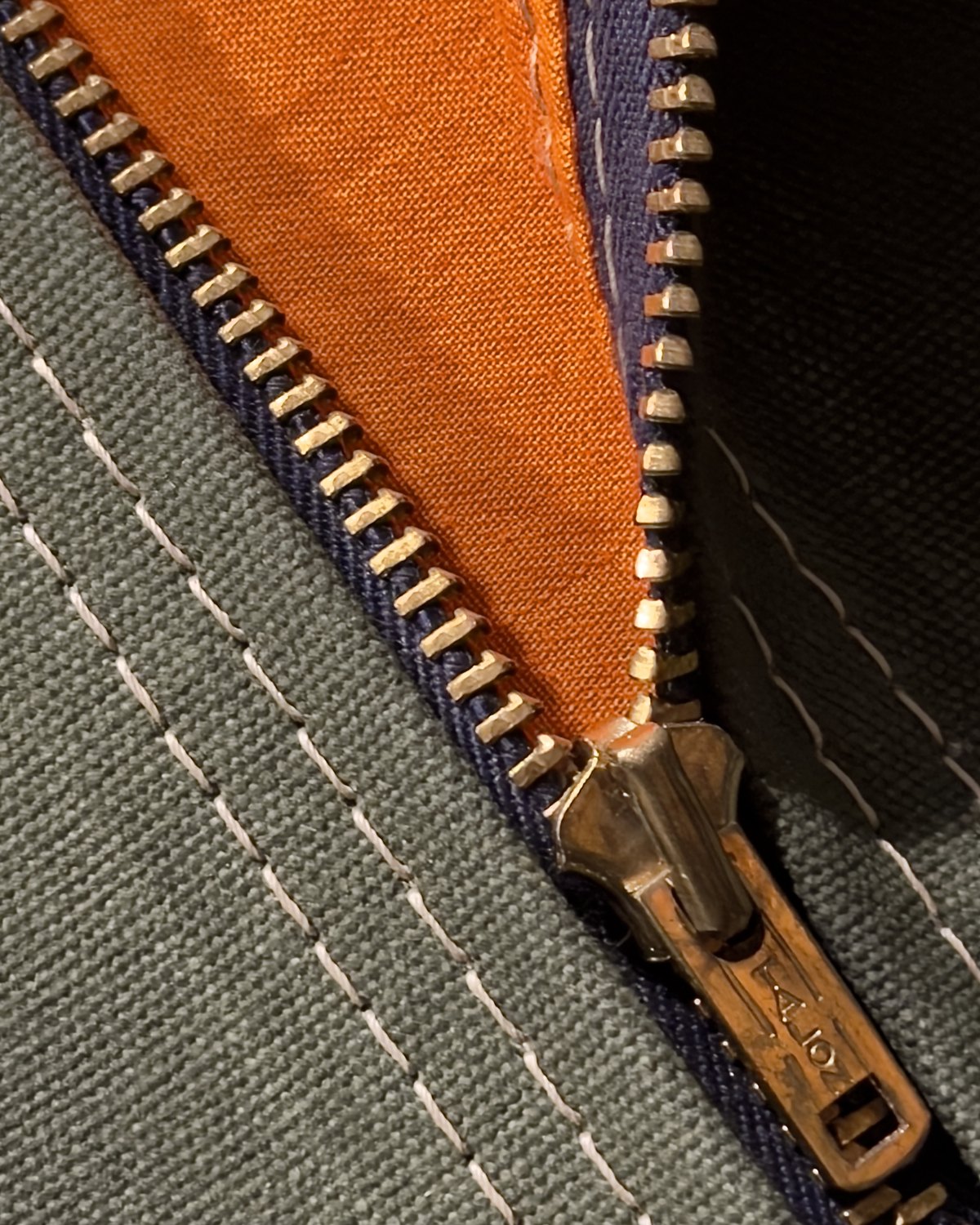
The first bag is on the bench. A boxy dopp kit — OD green wax canvas exterior, Combat Identification Panel lining, Talon brass zipper. A field pouch follows it.
Product pages open when the work ships. The registry is already keeping the record.
WHAT GOES INTO ONE
A short list, most of it in service before this brand existed. The exterior is salvaged canvas. The lining is a friendly-force marker — the orange cloth a ground unit spread so the aircraft overhead knew who was friendly — run in one of two threads: the VS‑17 of the Cold War years, or its thermal-age descendant, the Combat Identification Panel. The zipper is vintage Talon brass, and its color is whatever the salvage yielded. So each build is paired, not matched — a zipper series set against a marker face, offered only as the materials allow.
Each finished build carries its own full specification — every figure a fact — on its build page and on a card in the bag.
THE BUILD STANDARD
The Combat Identification Panels were engineered not to fail in theater. The construction inherits that discipline — not a fixed count of stitches, but a standard. Load-bearing seams are doubled where the load demands it. Bar tacks land where the construction calls for them, the quiet signature of a seam checked by the hand that sewed it. Corners are stepped and trimmed to lie flat after years. Every piece is inspected before the brass tag is stamped. The stamp is the certification, not the marketing.
THE LIMIT
The zipper sets it. The original American Talon that made these closed its US factories decades ago; this exact vintage article is no longer produced by anyone, only found. The supply on the shelf is counted, logged in the registry by lot, and never extended with a modern substitute. The count only goes down. When it is gone, the run ends.
THE BENCH
One room in Las Vegas, Nevada. One bench. One machine — a Sailrite LSZ‑1, American-made walking foot. The bags are built by hand, one at a time. When the work calls for more hands, they are family’s — never a factory’s. There is no second shift, no production line, no order that ships before it is right.
THE REGISTRY
Every build is numbered on brass, recorded on the day the tag is stamped, and traceable to its materials, its zipper, and the pattern it was cut from. Entries appear as builds are finished.
STAND BY FOR THE FIRST RUN · 32678.SHOP
Field proven. Built to last.